Writing a good AI prompt is vital in creating fabulous, high-quality images with models like Stable Diffusion. This guide is packed with tips and tricks to help you nail those prompts and get the best results. Whether you’re just starting out or looking to level up your skills, we’ve got you covered with practical advice and remarkable examples.
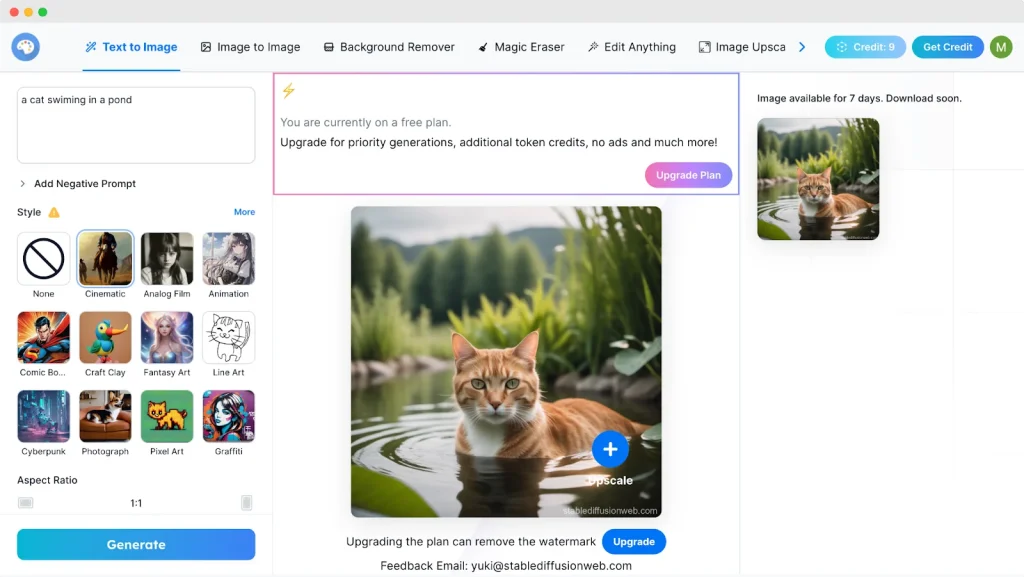
Writing good prompts isn’t just about getting better images — it’s becoming a new field called prompt engineering! This exciting development is changing the game for artists and tech enthusiasts, opening up new possibilities and making AI art more accessible and fun. So, let’s dive in and see how you can make the most of your AI art adventures with some killer prompt-writing techniques.
Understanding the Importance of a Good AI Prompt
A good AI prompt serves as clear instructions for the AI model. It guides the AI on what to generate, ensuring the output matches your expectations. Clear and detailed prompts lead to better and more accurate images.
Not Ideal: Draw a cat.

Good AI Prompt: Draw a black and white cat sitting on a wooden chair.
Be Specific and Detailed
Specificity is key. Include details about colors, shapes, sizes, and positions. The more information you provide, the better the AI can understand and generate the image.
Not Ideal: Draw a landscape.

Good AI Prompt: Draw a green meadow with colorful wildflowers and a clear blue sky.
Use Adjectives and Adverbs
Adjectives and adverbs enhance your prompts by adding depth and clarity. Words like “bright,” “dark,” “large,” and “small” provide more context.
Not Ideal: Draw a flower.

Good AI Prompt: Draw a bright red flower with large petals.
Incorporate Context and Background
Including context and background in your prompts helps create richer images. Describe the setting to provide a complete picture.
Not Ideal: Draw a tree.

Stable Diffusion Prompt: Draw a tall oak tree in the middle of a dense forest with sunlight filtering through the leaves.
Experiment with Different Phrasing
Experimenting with different phrasings can significantly impact the generated image. Sometimes, changing a word or two can yield better results.
Not Ideal: Draw a big dog.

AI Prompt Art: Draw a large golden retriever sitting in a garden.
Use Comparative Phrases
Comparative phrases help the AI understand the relationship between objects. Phrases like “next to,” “above,” and “below” clarify positioning.
Not Ideal: Draw a cat and a dog.

Stable Diffusion Prompt: Draw a cat sitting next to a dog on a couch.
Utilize Lists for Clarity
Breaking down complex instructions into lists can make prompts clearer. Lists help the AI process each element separately.
Not Ideal: Draw a park with trees, benches, and people.

Good AI Prompt: Draw a park. Include trees, benches, and people walking.
Pay Attention to Grammar and Syntax
Proper grammar and syntax ensure the AI understands your instructions. Clear sentences lead to better interpretations.
Not Ideal: Draw a dog which is brown and white and sitting on grass.

AI Prompt Art: Draw a brown and white dog sitting on the grass.
Include Examples for Guidance
Providing examples or references in your prompts can guide the AI. Mentioning styles or specific attributes can help the AI generate more accurate images.
Not Ideal: Draw a superhero.

AI Prompts Examples: Draw a superhero in the style of Marvel comics.
Refine Prompts Based on Results
Refining your prompts based on the AI-generated results is crucial. Adjust your prompts to improve accuracy and achieve the desired outcome.
First Attempt: Draw a bird.

Refined Prompt: Draw a blue bird perched on a tree branch with green leaves.
Leverage AI Tools and Resources
Many AI tools and platforms offer resources to help you write better prompts. Use prompt libraries, templates, and examples provided by these platforms to improve your skills.
Using a Library Template: "Create a fantasy landscape with dragons and castles."Understand the AI’s Capabilities and Limitations
Knowing what the AI can and cannot do helps in writing effective prompts. Each AI model has strengths and weaknesses, so tailor your prompts accordingly.
For Realistic AI: Draw a realistic portrait of a young woman with curly hair.

For Abstract AI: Create an abstract painting with bold colors and geometric shapes.
Keep Prompts Concise
While details are important, keeping your prompts concise ensures clarity. Avoid overly long and complicated sentences.
Not Ideal: Draw a beautiful, colorful sunset over a calm ocean with a small sailboat in the distance and a flock of birds flying across the sky.

Good AI Prompt: Draw a colorful sunset over a calm ocean with a small sailboat and birds flying in the sky.
Combine Visual and Textual Descriptions
Combining visual elements with textual descriptions can enhance your prompts. For better results, provide reference images or sketches along with textual instructions.
Textual Only: Draw a mountain landscape.

Textual with Visual: Draw a mountain landscape (attach reference image of mountains).
Practice Consistency
Consistency in your prompts helps maintain a uniform style and quality in the generated images. If you are working on a series of images, use similar phrasing and structure.
For a Series: Draw a medieval knight. Draw a medieval castle. Draw a medieval village.Seek Feedback from the Community
Engage with AI art communities and forums to seek feedback on your prompts. Experienced users can offer valuable insights and suggestions to improve your prompts.
Community Input: Share your prompt and results in a forum and ask for tips on improving clarity and detail.Document Your Prompts and Results
Keeping a record of the prompts you use and the results they generate helps you identify what works best. Documenting your process allows you to replicate successful techniques.
Documentation: Keep a log of your prompts, the AI-generated images, and any refinements made.Experiment with Different AI Models
Different AI models may interpret the same prompt in various ways. Experiment with multiple AI platforms to see which one best suits your needs.
Compare Results: Use the same prompt on Stable Diffusion, DALL-E, and MidJourney to compare outputs.Embrace Creativity and Imagination
Embrace creativity and imagination in your prompts. Don’t be afraid to experiment and think outside the box. Unique and creative prompts can lead to stunning and innovative AI-generated images.
Creative Prompt: Create a surreal landscape with floating islands, waterfalls, and flying fish.Writing good AI prompts is essential for generating high-quality images with AI models like Stable Diffusion. Following these tips and examples can improve your prompt-writing skills and achieve better results. Remember to be specific, use descriptive language, and refine your prompts based on feedback. With practice and creativity, you can create stunning AI-generated art that matches your vision.
Leave a Reply